English




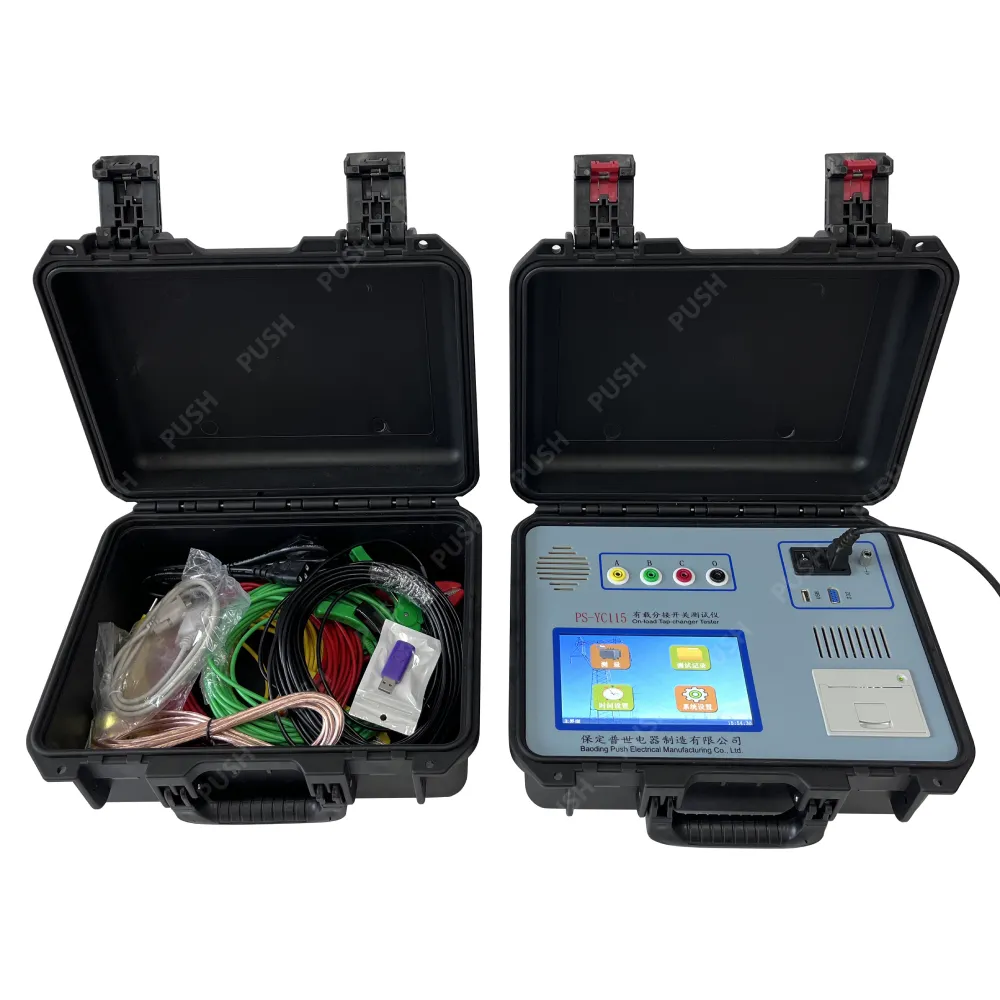
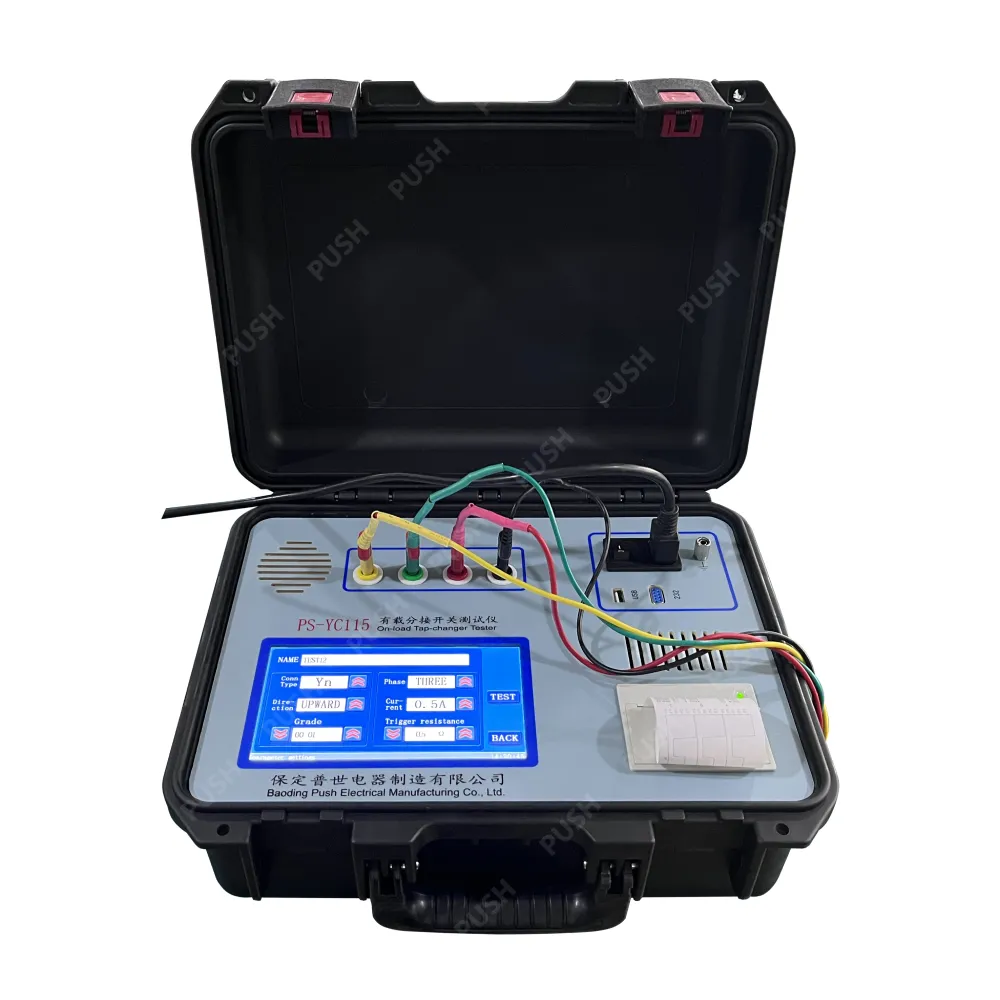
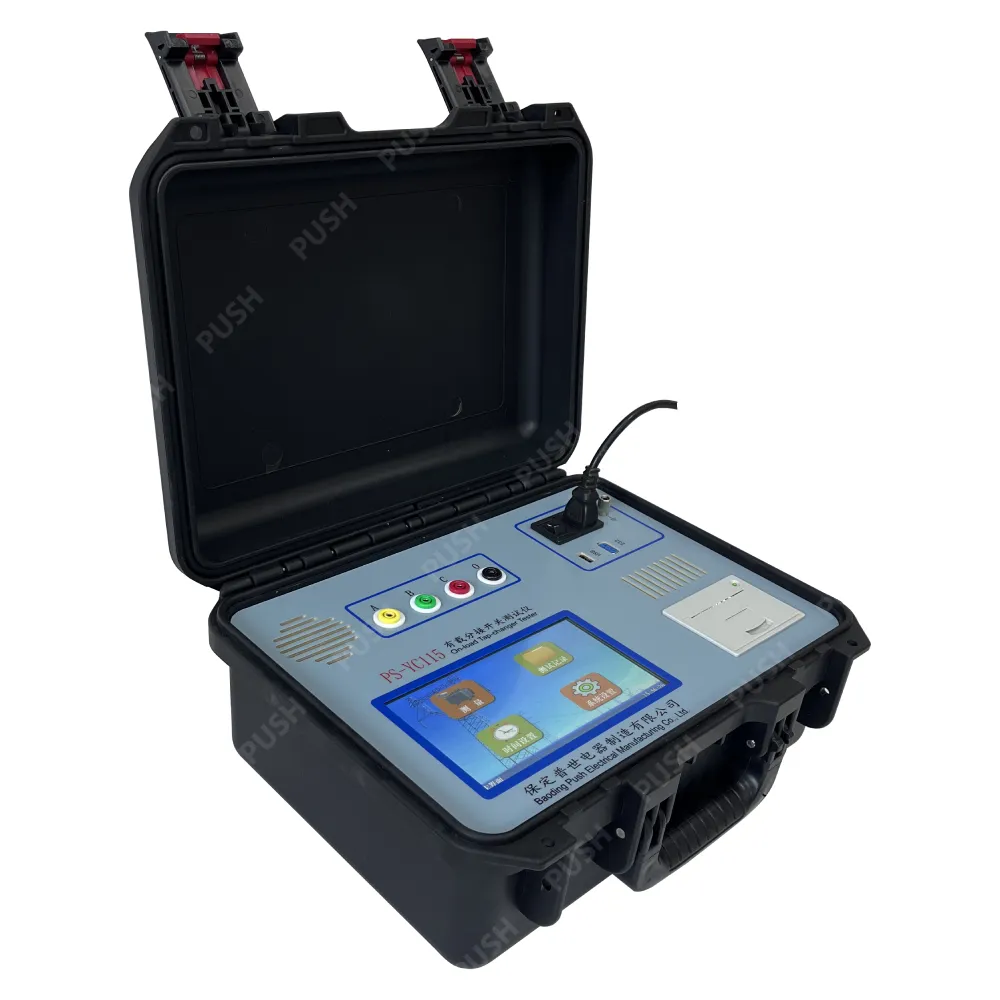
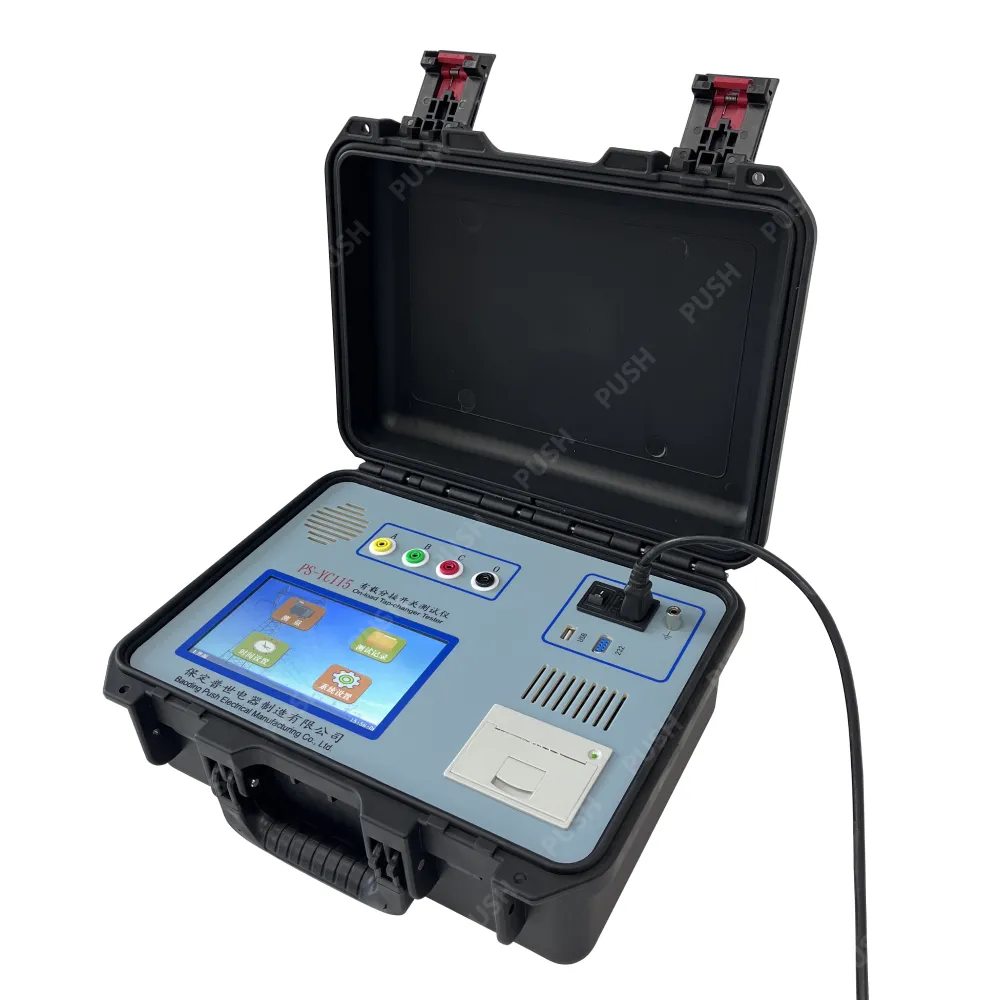
- ● The instrument has large output current and light weight;
● Test YN, Y, △-type transformers, the resistance value can be displayed directly without conversion
● Can be measured with or without winding
● The waveform display automatically adjusts the resistance value, time value and amplitude according to the sampled value
● It has perfect protection circuit and strong reliability
● 7-inch large LCD screen, easy to operate on site
● 500 sets of data can be automatically saved inside. -
The On-Load Tap-Changer (OLTC) Tester is a specialized instrument used for testing and evaluating the performance of on-load tap-changers, which are critical components in power transformers. These testers assess the functionality, reliability, and electrical characteristics of OLTCs under various operating conditions, helping to ensure the efficient and safe operation of power transmission and distribution systems.
Maintenance Testing: OLTC testers are used by utility companies, maintenance contractors, and power system operators to perform routine diagnostic tests on tap-changers installed in power transformers. These tests help identify potential issues or defects in the tap-changer mechanism and associated components, allowing for proactive maintenance and repair actions.
Commissioning: During the commissioning process of power transformers, OLTC testers are employed to verify the proper operation and alignment of tap-changers with the transformer windings. This ensures that the tap-changer functions correctly and switches between tap positions smoothly without causing interruptions or voltage fluctuations in the electrical network.
Troubleshooting: When tap-changer malfunctions or operational problems occur, OLTC testers are used to diagnose the root cause of the issue by conducting comprehensive electrical tests and performance evaluations. This helps troubleshooting teams quickly identify and rectify any faults or abnormalities in the tap-changer mechanism, minimizing downtime and service disruptions.
Electrical Testing: OLTC testers perform a range of electrical tests, including winding resistance measurement, insulation resistance measurement, voltage regulation tests, and dynamic resistance measurements during tap-changing operations.
Control Interface: These testers typically feature user-friendly interfaces with intuitive controls and graphical displays, allowing operators to easily configure test parameters, monitor test progress, and analyze test results in real-time.
Safety Features: OLTC testers incorporate safety mechanisms such as interlocking systems, overload protection, and emergency stop buttons to ensure operator safety during testing procedures and prevent damage to the tap-changer and associated equipment.
Data Logging and Analysis: Advanced OLTC testers are equipped with data logging capabilities to record test data, waveform captures, and event logs for further analysis and reporting. This facilitates comprehensive assessment and documentation of tap-changer performance over time.
Preventive Maintenance: Regular testing with OLTC testers helps identify potential issues or deteriorations in tap-changer condition before they escalate into major failures, enabling proactive maintenance and extending the service life of power transformers.
Enhanced Reliability: By verifying the proper operation and alignment of tap-changers, OLTC testers contribute to the overall reliability and stability of power transmission and distribution systems, reducing the risk of unplanned outages and equipment damage.
Regulatory Compliance: Compliance with industry standards and regulatory requirements is ensured through periodic testing and documentation of tap-changer performance using OLTC testers, demonstrating adherence to best practices in power system maintenance and operation.
|
Output current |
2.0A、1.0A、0.5A、0.2A |
|
|
Measuring range |
Transition resistance |
0.3Ω~5Ω(2.0A) 1Ω~20Ω(1.0A) |
|
transition time |
0~320ms |
|
|
Open circuit voltage |
24V |
|
|
measurement accuracy |
Transition resistance |
±(5%reading±0.1Ω) |
|
transition time |
±(0.1%reading±0.2ms) |
|
|
sample rate |
20kHz |
|
|
storage method |
local storage |
|
|
Dimensions |
host |
360*290*170(mm) |
|
wire box |
360*290*170(mm) |
|
|
Instrument weight |
host |
6.15KG |
|
wire box |
4.55KG |
|
|
ambient temperature |
-10℃~50℃ |
|
|
environment humidity |
≤85%RH |
|
|
Working power |
AC220V±10% |
|
|
Power frequency |
50±1Hz |
|
-
 Guide to Choosing the Right Industrial Oil Testing Kit for MachineryMaintaining industrial machinery requires more than just regular lubrication; it demands precise monitoring of lubricant health. An oil testing kit serves as the first line of defense against catastrophic equipment failure. By analyzing oil quality on-site, maintenance teams can detect contamination, oxidation, and wear particles before they lead to costly downtime. Whether you are managing a fleet of heavy machinery or a complex manufacturing plant, understanding the capabilities of your testing tools is essential for maximizing operational efficiency. In this guide, we will explore how to select and utilize the best tools for your specific industrial needs.Detail
 -
 The Ultimate Guide to Transformer Oil Analysis for Grid ReliabilityMaintaining the health of electrical transformers is critical for preventing catastrophic failures and ensuring an uninterrupted power supply. One of the most effective ways to monitor this health is through professional transformer oil analysis, a process that acts as a blood test for your high-voltage equipment. By examining the physical, chemical, and dissolved gas properties of the insulating oil, engineers can detect early signs of overheating, electrical discharge, or insulation degradation. In this comprehensive guide, we will explore how systematic oil testing can extend the lifespan of your assets and reduce unplanned downtime.Detail
 -
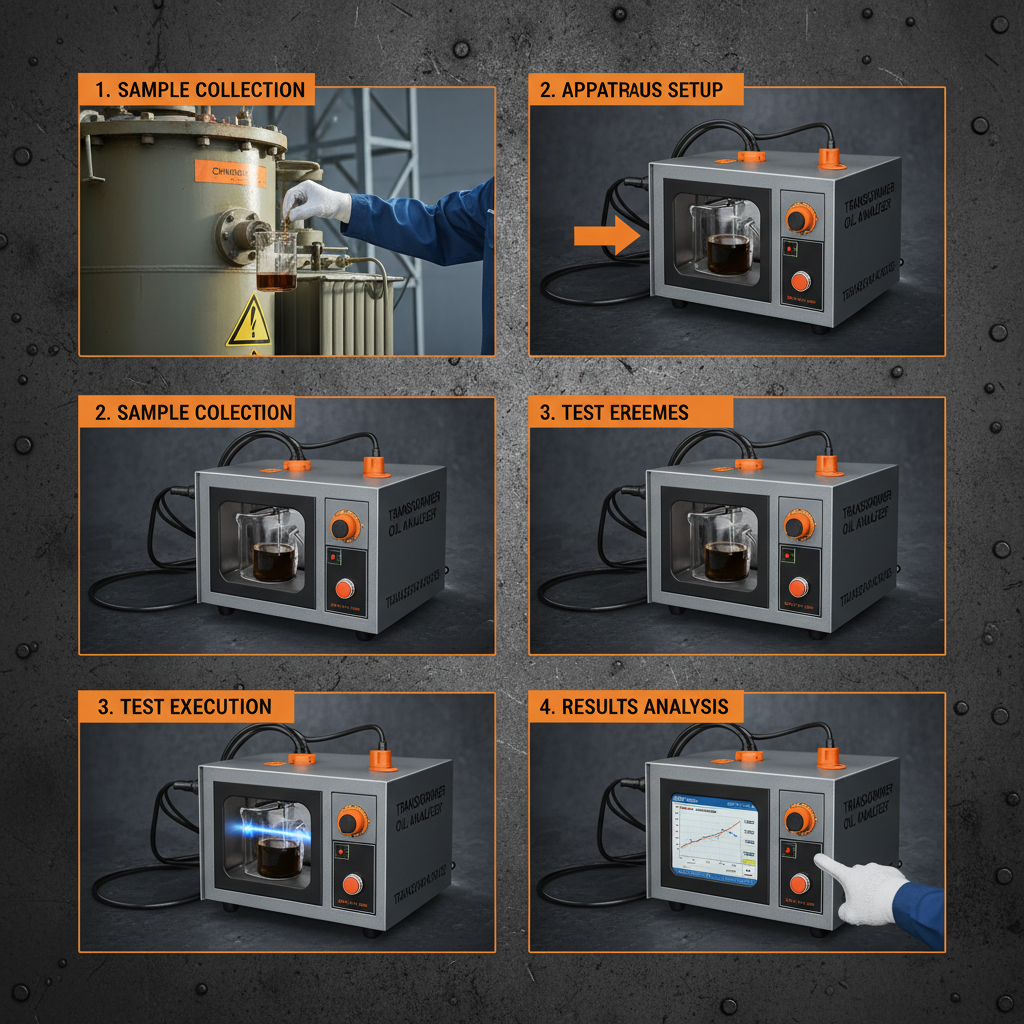 Comprehensive Guide to Transformer Oil Testing and Maintenance ProceduresMaintaining the health of your transformers is crucial for reliable power distribution. Regular transformer oil testing identifies potential issues before they lead to costly downtime or equipment failure. This article will detail the key tests performed, the importance of each, and how advancements in testing equipment are improving accuracy and efficiency.Detail