English



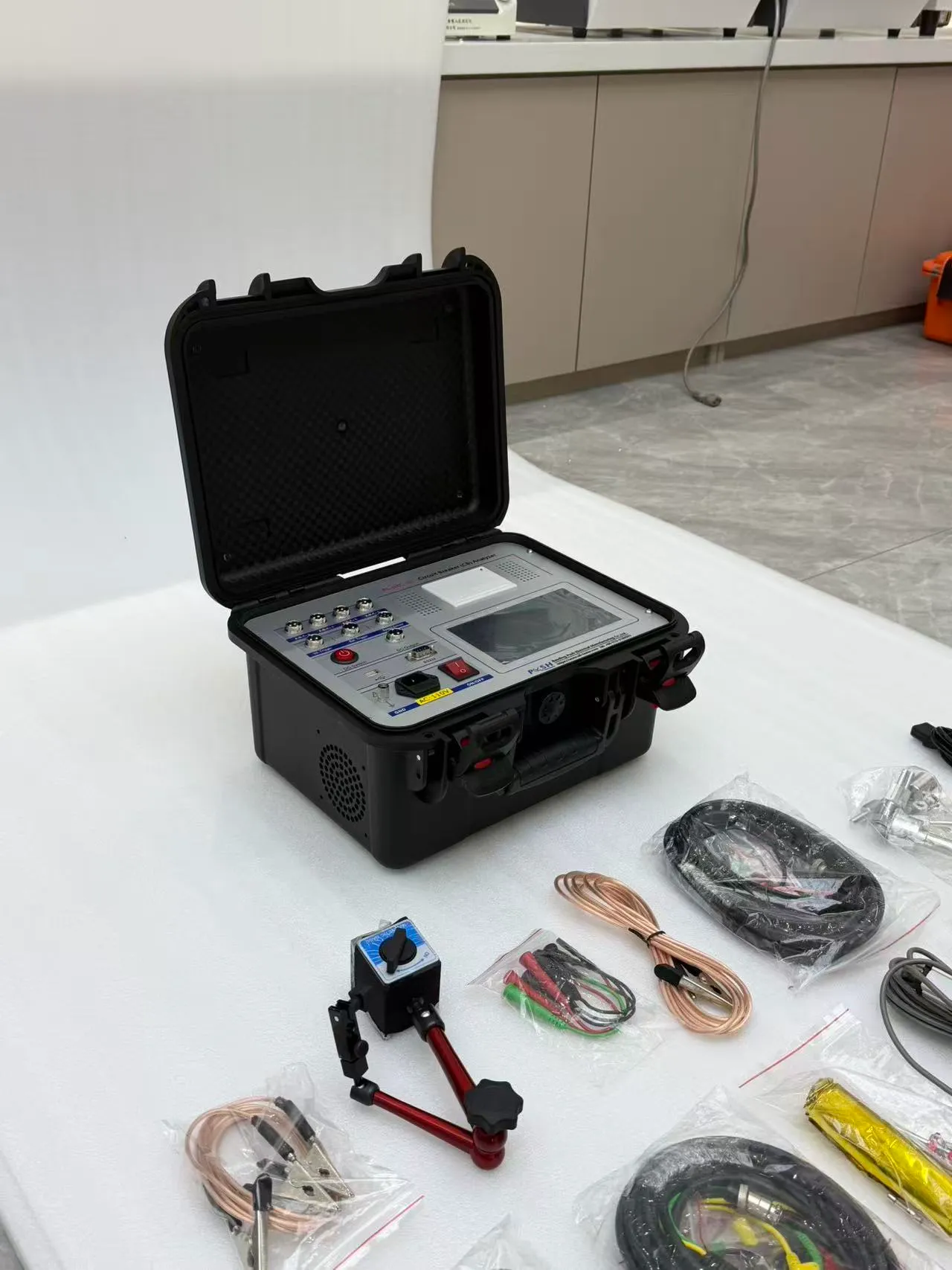
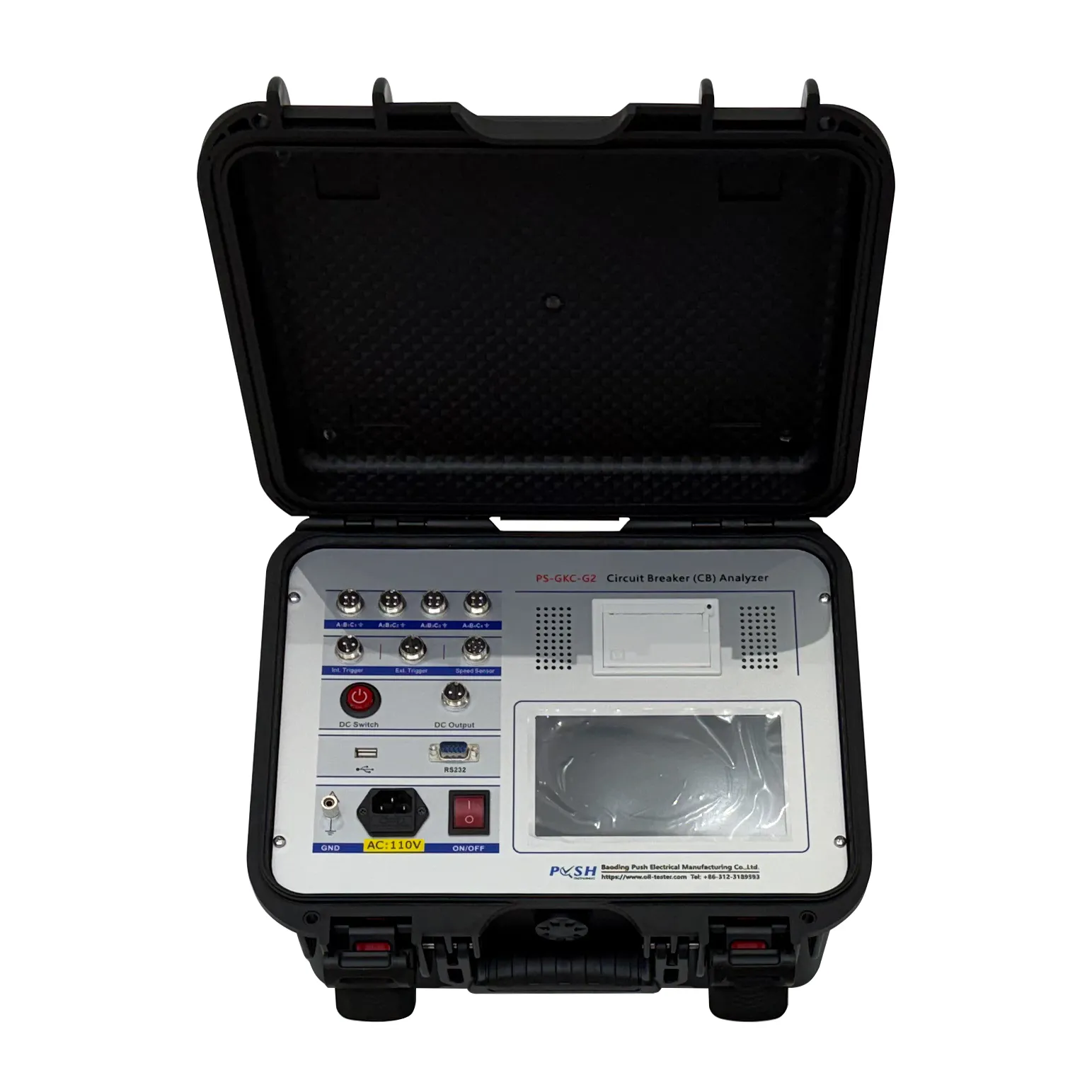
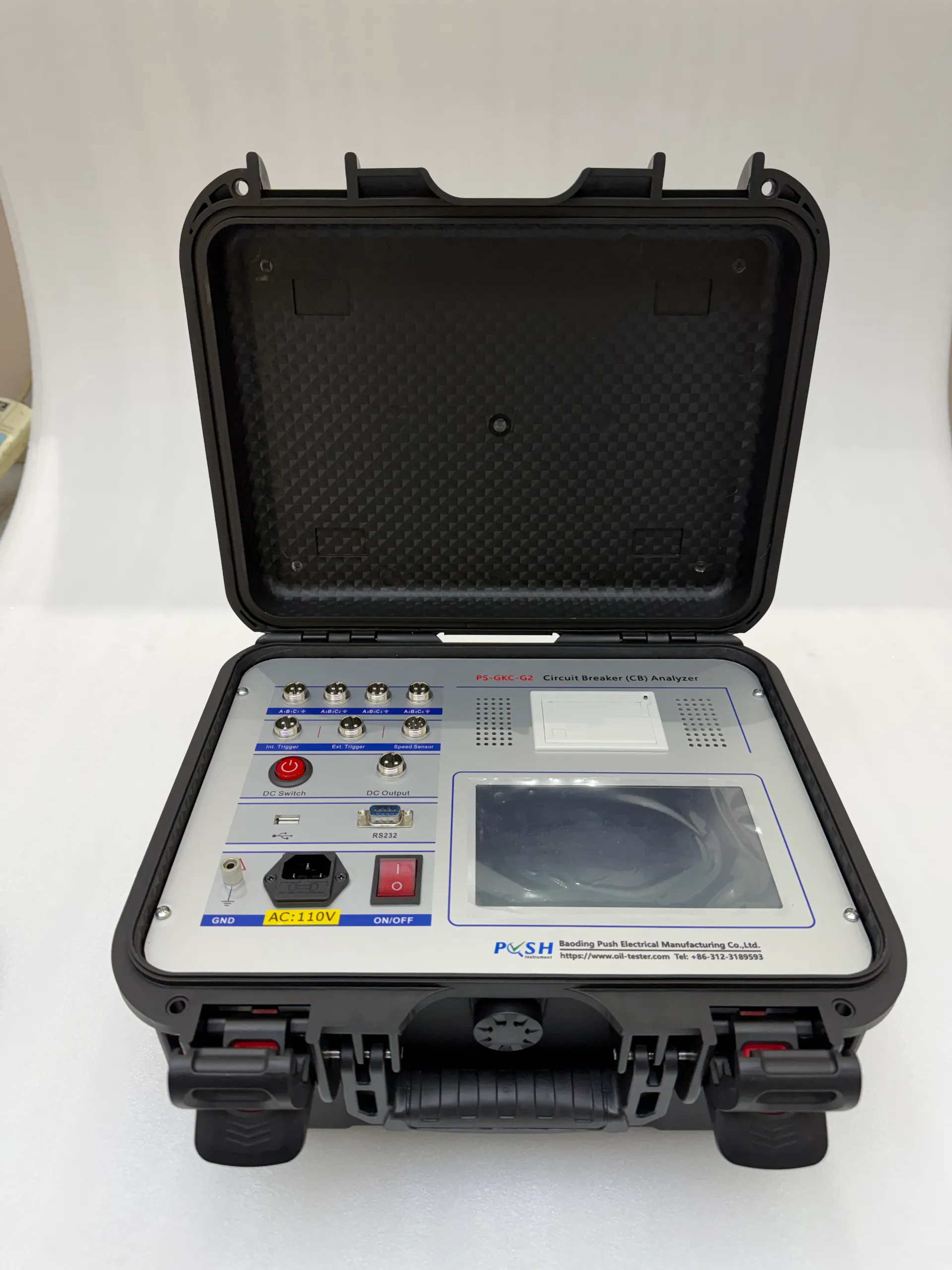
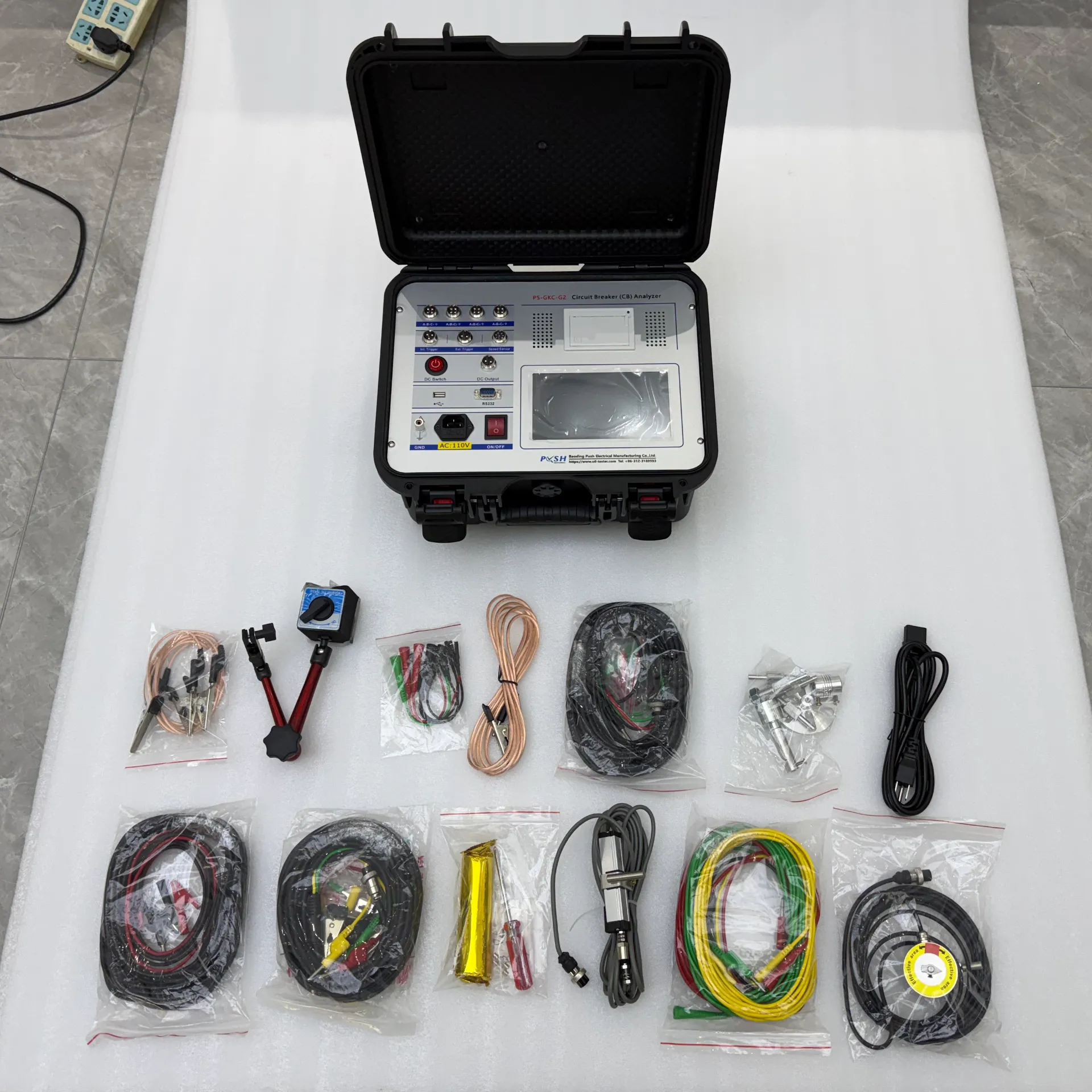
Features
(1)The integrated internal operating power supply eliminates the need for a secondary power supply on-site, making it convenient and quick to use. It provides an adjustable DC 20-270V power supply with a maximum instantaneous current of 30A. Its unique dual-circuit power supply design allows for testing of closing and opening circuits even if one circuit fails.
(2)Equipped with linear and rotary sensors and dedicated fixed multi-functional connectors, installation is extremely convenient and simple. The linear sensor length can be set arbitrarily from 30-1000mm; only the sensor needs to be installed, and the instrument does not require factory reprogramming.
(3)The main unit can store 100 sets of current test data, and features an internal real-time clock for easy archiving.
(4)Equipped with a USB flash drive interface and an RS232 interface, data can be saved to a USB flash drive and uploaded to a computer for analysis, storage, and printing. The RS232 interface allows for online computer connection (optional).
(5)Internal anti-interference circuitry ensures reliable operation within 500kV substations.
Technical parameters
1.Time Measurement: | 12-channel inherent opening (closing) time |
Asynchrony within opening (closing) phases | |
Difference in asynchrony between opening (closing) phases (1-99ms) | |
Closing (opening) bounce time (number of bounces) | |
Internal trigger test range: 1ms-10000ms, resolution: 0.01ms | |
External trigger test range: 1ms-10000ms | |
Resolution within 999ms: 0.01ms, 1000-9999ms: 0.1ms, above 10000ms: 1ms. | |
Accuracy within 200ms: 0.05%±0.1ms | |
2.Speed Measurement: | Speed at initial separation (or engagement) Average speed over a specified time period (stroke or angle segment) |
3.Measurement Range: | Linear sensor: 0.01~20.00m/s, accuracy ±0.1m/s |
345° angle sensor: 0.01~20.00m/s, accuracy ±0.1m/s | |
4.Stroke Measurement: | Moving contact stroke (stroke) |
Contact stroke (opening distance) | |
Overtravel | |
Overshoot or rebound stroke | |
5.Measurement Range: | Linear sensor: 50mm, measurement range: 0-50mm, resolution 0.1mm.Optional linear sensor of any length from 100-1000mm. |
Rotary sensor: 345° rotary sensor, measurement range: 0-1000mm, resolution 0.08°. Accuracy ± (1%L + 0.2) mm | |
6.Current and Resistance Range: | Maximum current 20A, resolution: 0.01A; resistance 1000Ω, resolution: 0.01Ω. Accuracy ± 5%. |
7.Instrument Power Supply: | AC 220V ± 10%; 50Hz ± 10% |
8.DC Power Output | DC20~270V continuously adjustable, instantaneous maximum current 30A, power 3300W. |
9.External trigger voltage: | AC/DC 10-300V, current ≤120A |
10.Measurement range of disconnecting switch or energy storage circuit breaker: | ⑴ Voltage output: DC 20~270V (adjustable); |
⑵ Power output time: 0.01-10 seconds (adjustable); | |
⑶ Maximum acquisition time of disconnection signal: 10 seconds; | |
⑷ Measurable disconnection closing and opening time, three-phase asynchrony, bounce time and number of times | |
11.Main unit dimensions: | 360×260×170mm |
12.Operating environment: | -20℃~+50℃ |
13.Relative humidity: | ≤90% |
-
 Precision Guide to the Electrode Used in Potentiometric TitrationPrecision Measurement: The Role of the Electrode Used in Potentiometric Titration In the realm of analytical chemistry and industrial quality control, achieving absolute precision is non-negotiable. The electrode used in potentiometric titration serves as the heart of this process, converting chemical activity into a measurable electrical potential. Whether you are analyzing petroleum products, environmental water samples, or pharmaceutical compounds, the selection of the right sensor determines the accuracy of your endpoint detection. By eliminating the subjectivity of visual color indicators, potentiometric methods provide a scientific, repeatable approach to quantitative analysis. In this guide, we will explore the technical intricaciesDetail
-
 High Precision Analysis Using the Potentiometer TitratorPrecision Analysis with the Potentiometer Titrator: An Industry Overview In the realm of high-precision chemical analysis, the potentiometer titrator serves as a critical instrument for determining the concentration of identified analytes in a solution. By measuring the potential difference between two electrodes, these devices provide unmatched accuracy in volumetric analysis, particularly in the oil and petroleum industries. Whether you are monitoring fuel quality or analyzing industrial lubricants, the ability to detect the exact equivalence point is paramount. This guide explores the technical superiority, applications, and operational benefits of integrating advanced titration systems into your laboratory workflow to ensure rigorous quality controlDetail
-
 Optimize Petroleum Analysis with Pour Point Test EquipmentOptimizing Petroleum Analysis with Pour Point Test Equipment In the petrochemical and lubricant industries, understanding the low-temperature flow properties of oil is critical for operational safety and efficiency. High-quality pour point test equipment provides the precise measurements needed to determine the lowest temperature at which a liquid remains pourable. Whether dealing with lubricating oils, fuels, or hydraulic fluids, ensuring that these substances do not solidify in cold climates is essential to prevent engine failure and system blockages. This guide explores the technical nuances, industrial applications, and the importance of choosing professional-grade instrumentation for petroleum analysis.Detail