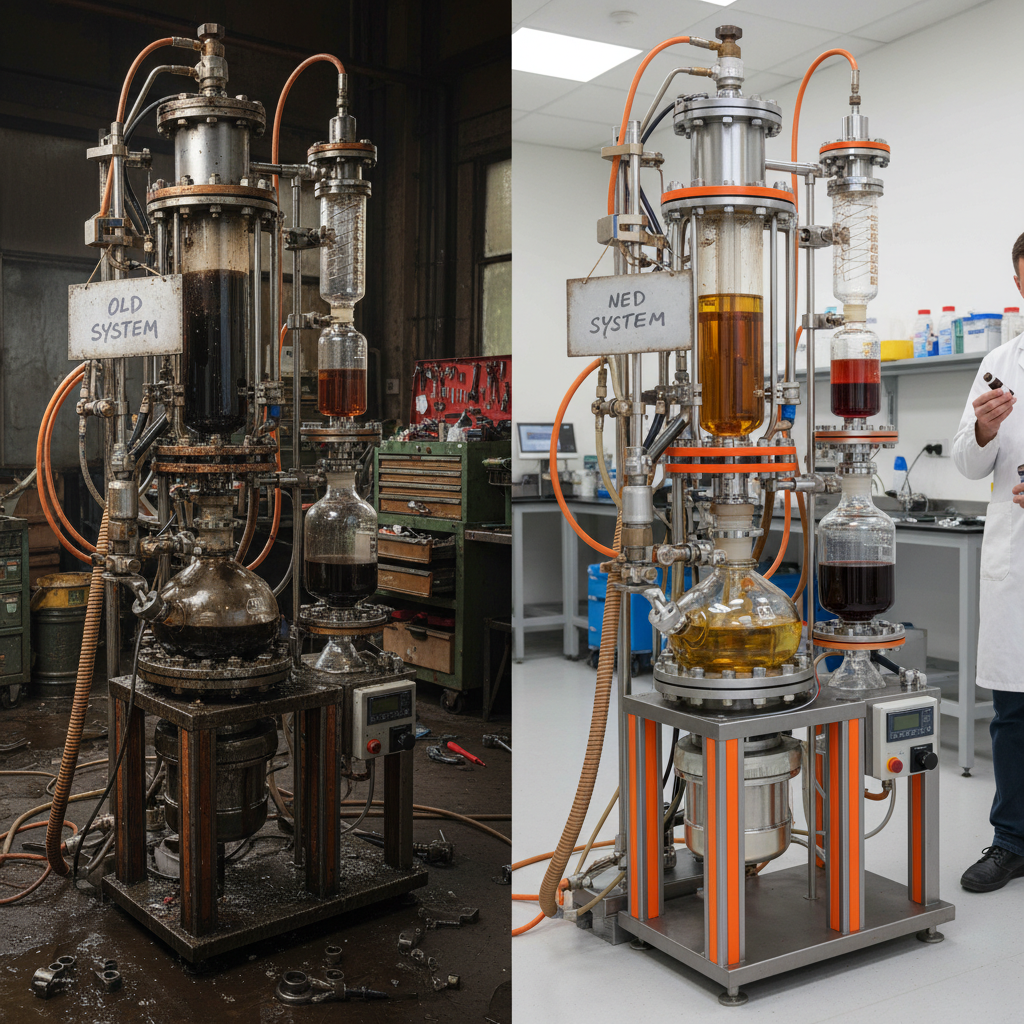
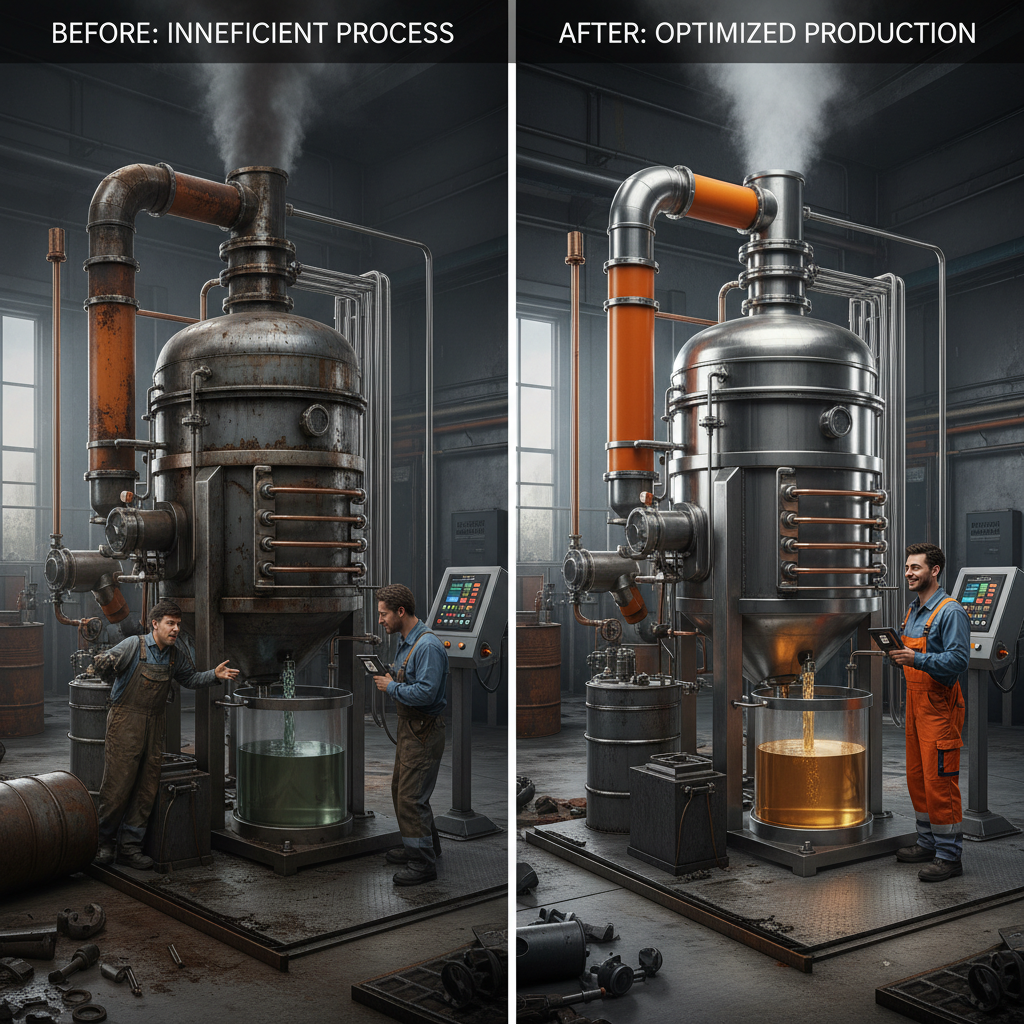
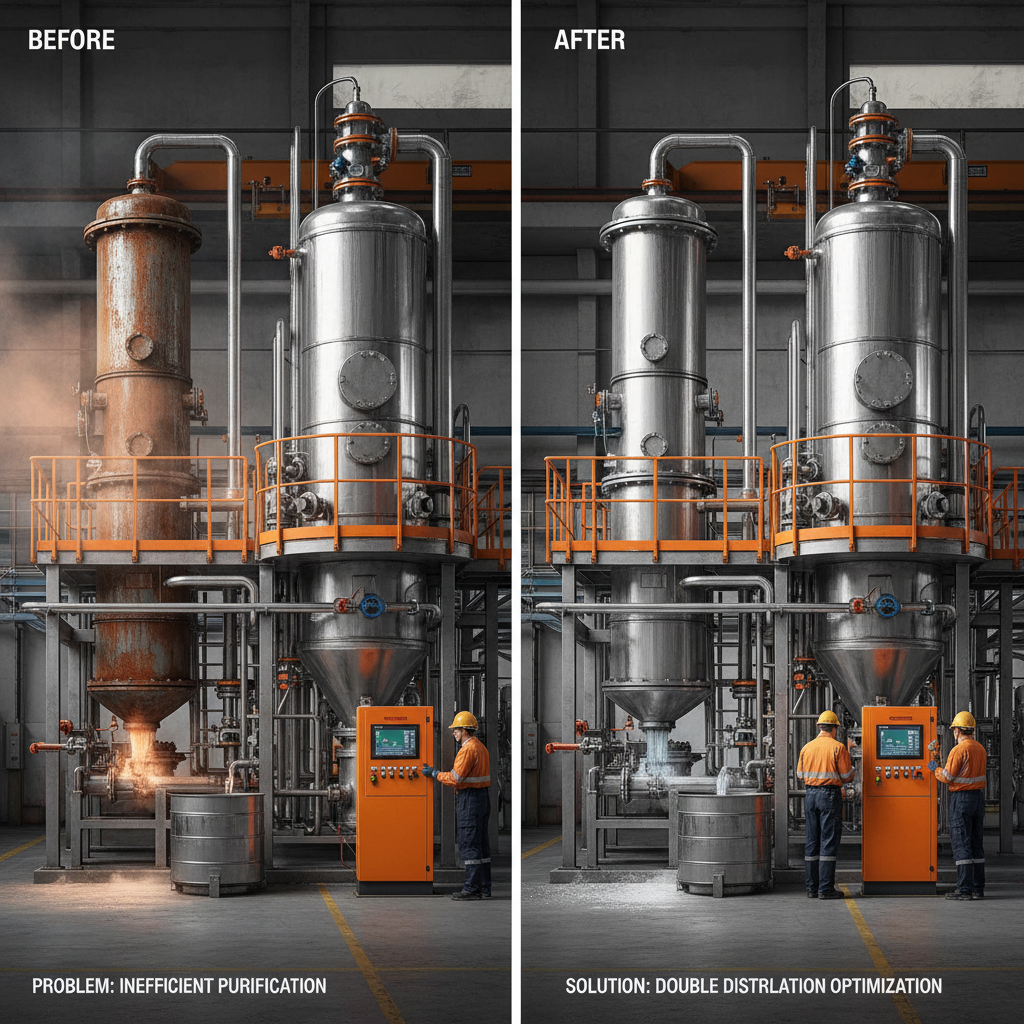
Look, I’ve spent the last fifteen years wading through mud, wrestling with specs, and talking shop with the guys actually building things. When you're knee-deep in a project, you need equipment that just works. That’s where a robust short path distillation unit comes in. It's not about fancy marketing; it’s about reliable performance when everything else is going sideways. We’re seeing a huge demand for on-site testing and quality control, and a good unit is the backbone of that. It’s about catching problems before they become disasters, saving time, money, and headaches.
The world’s getting more complex, and material sourcing is a minefield. Regulations are tightening, and the pressure’s on to ensure everything meets spec. A short path distillation unit isn’t just a piece of kit; it’s a safeguard. It allows you to verify the purity and composition of materials right there on the job, eliminating the guesswork and the delays that come with sending samples off to a lab. I’ve seen projects held up for weeks waiting on lab results – a good unit eliminates that bottleneck.
What I've noticed is that contractors are increasingly looking for ways to streamline processes and reduce risk. The cost of rework due to substandard materials is astronomical. A quality short path distillation unit is an investment that pays for itself quickly by preventing those costly mistakes. It's about proactive quality management, not reactive firefighting.
The Importance of short path distillation unit in Modern Construction
Let’s be straight – a short path distillation unit isn't just for the lab coats. It's about getting real-time data on the materials we’re using, right now. I've been on sites where a small discrepancy in material composition caused massive delays and cost overruns. Having the ability to quickly and accurately analyze materials on site—fuels, solvents, oils—is critical for maintaining quality control and avoiding those kinds of problems.
The construction industry is inherently risky. You’re dealing with tight deadlines, unpredictable weather, and a constant stream of materials coming and going. A reliable short path distillation unit reduces that risk by providing a clear picture of material integrity, which is more important than ever in today's complex building environments.
Defining short path distillation unit: A Practical Perspective
Basically, a short path distillation unit allows you to separate different components of a liquid mixture based on their boiling points. But forget the textbook definition. On a construction site, it translates to figuring out if the fuel we're using is up to spec, if the solvents are pure enough for the job, or if the oils are still within their operational parameters. It’s about verifying that the materials we’re receiving are actually what we paid for.
It's crucial for ensuring safety, too. Contaminated or degraded materials can pose serious hazards. A quick test with a short path distillation unit can identify potential problems before they lead to accidents or equipment failures. It's a simple tool that can prevent a lot of trouble.
It's become essential in meeting modern environmental regulations and quality standards. Documentation and traceability are key, and a short path distillation unit provides that evidence, showing you've taken the necessary steps to ensure material quality and compliance.
Core Components and Considerations for short path distillation unit
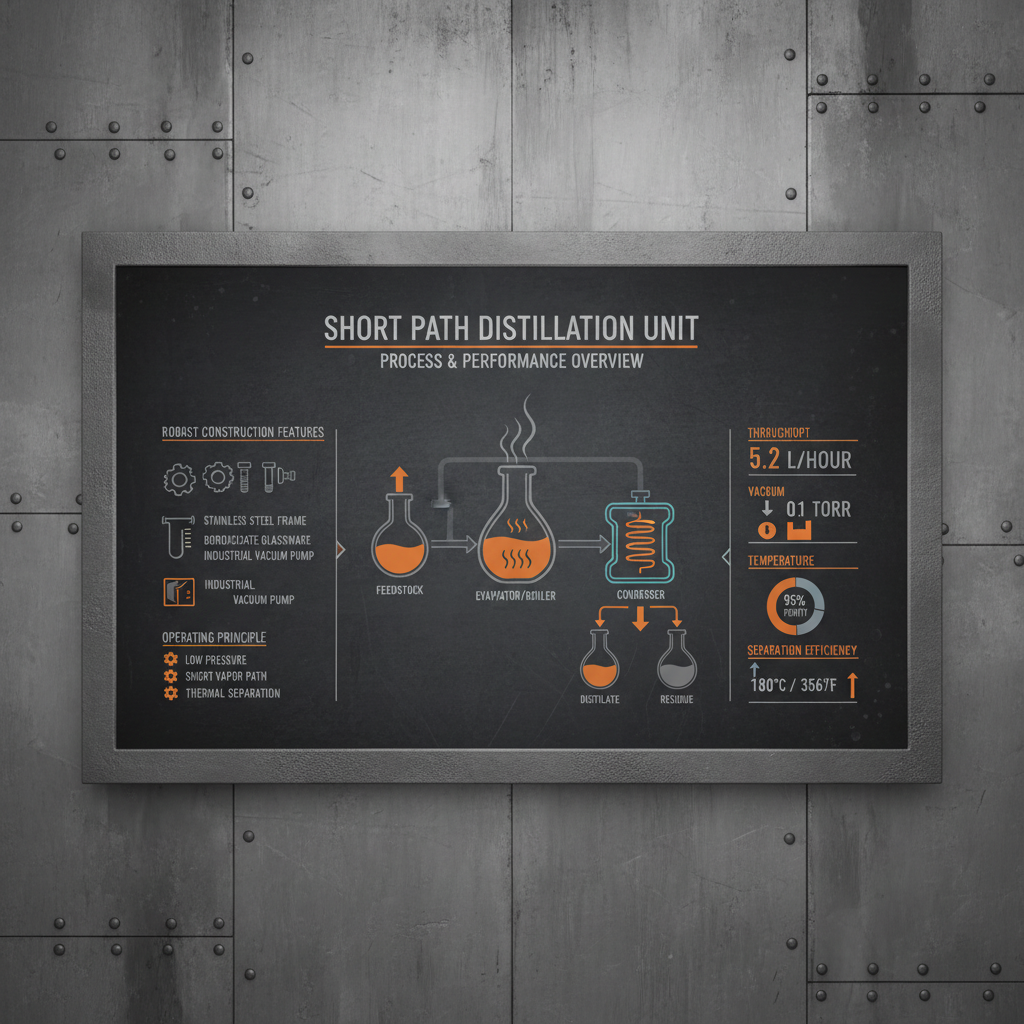
When I'm looking at a short path distillation unit, I'm not concerned with bells and whistles. I want something that’s built to last, easy to operate, and provides accurate results. Key components are the heating system – needs to be precise and reliable – the vacuum pump, which is crucial for lowering the boiling points, and the collection flasks. Durability is paramount; this equipment gets bumped around on job sites.
Portability is also huge. We're often working in remote locations or confined spaces. A bulky, cumbersome unit is a non-starter. It needs to be relatively lightweight and easy to transport. Also, consider the power requirements. Can it run off a standard generator, or do you need a dedicated power source? These are the real-world considerations.
Finally, and this is critical, consider the learning curve. The operators need to be able to quickly understand how to use the unit and interpret the results. A complicated system with a steep learning curve is going to sit in the storage container instead of being used, defeating the whole purpose.
Durability, Reliability, and Lifespan of short path distillation unit
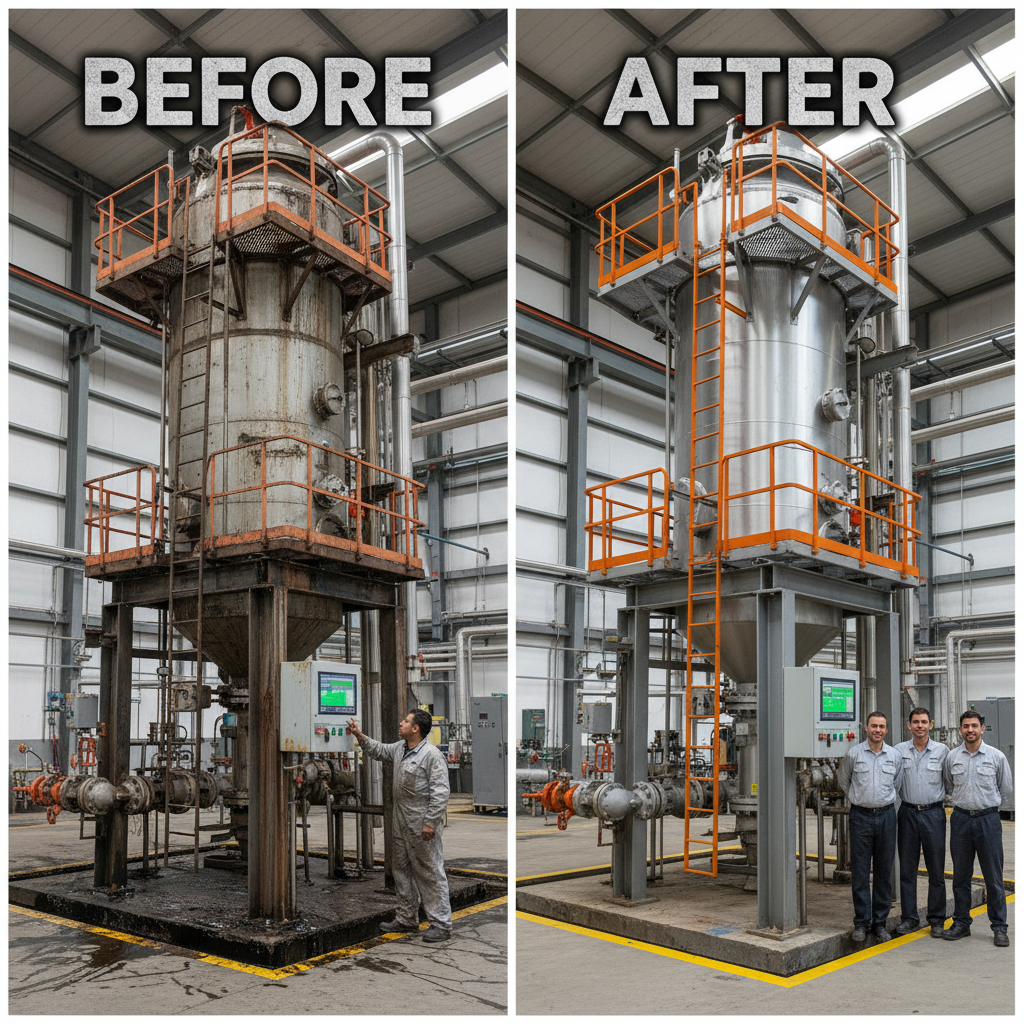
Look, I don't buy equipment that's going to fall apart after a few months of use. A short path distillation unit needs to withstand the rigors of a construction site. That means a rugged construction, quality materials, and robust components. We're talking about a potential investment, and it needs to have a reasonable lifespan.
Reliability Ratings of short path distillation unit Features
Global Applications and Real-World Use Cases
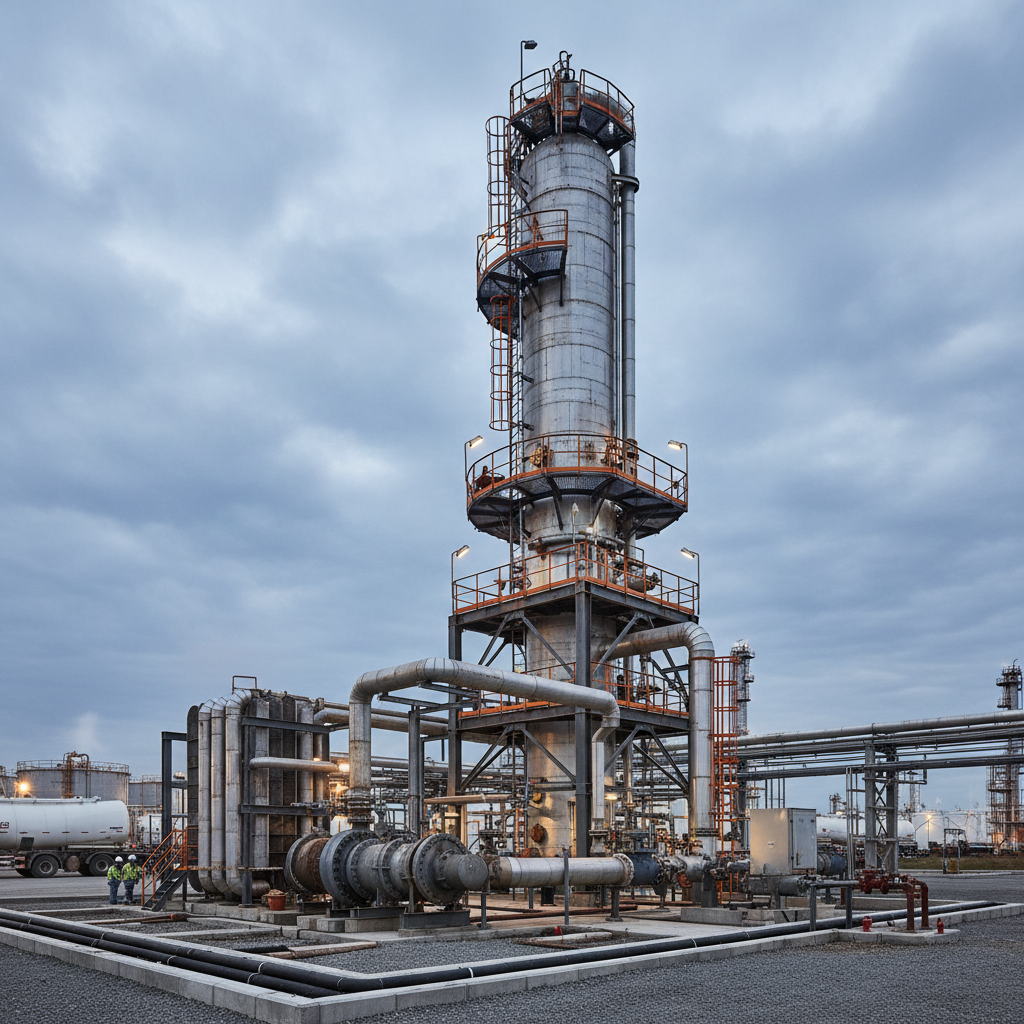
I’ve seen these units deployed everywhere – from oil refineries in the Middle East to remote mining operations in South America. They’re critical for ensuring fuel quality and preventing equipment failures. In post-disaster relief efforts, they can be used to analyze contaminated water sources and ensure the safety of drinking water supplies.
They're also becoming increasingly common in the petrochemical industry, where precise separation and purification of chemicals are essential. Even in smaller-scale applications, like solvent recycling facilities, a short path distillation unit can significantly reduce waste and lower operating costs.
Long-Term Value and Economic Benefits of short path distillation unit
Let's talk dollars and cents. Preventing a major equipment failure or a costly rework is worth its weight in gold. A short path distillation unit provides that peace of mind. It’s an investment that pays dividends in reduced downtime, lower maintenance costs, and improved product quality.
It also reduces the risk of fines and penalties for non-compliance with environmental regulations. And, frankly, it builds trust with clients. Showing them that you’re committed to quality control and material integrity is a huge selling point.
Beyond the immediate cost savings, a reliable short path distillation unit can enhance a company's reputation and build long-term relationships with clients. It's about demonstrating a commitment to excellence and delivering on promises.
Future Trends and Innovations in short path distillation unit Technology
We’re seeing a push towards more automated systems, with real-time data logging and remote monitoring capabilities. That means fewer manual checks and faster, more accurate results. Also, there’s a growing demand for smaller, more portable units that can be easily deployed in remote locations.
I’m also keeping an eye on the development of new materials that can withstand higher temperatures and pressures, improving the efficiency and reliability of the distillation process. Integrating with digital platforms for data analysis and reporting is another key trend. This will allow for better tracking of material quality and identify potential problems before they arise.
Sustainability is becoming a bigger focus, too. Developing more energy-efficient short path distillation unit systems and reducing waste are essential for minimizing environmental impact.
Summary of Key Factors Influencing short path distillation unit Performance
| Material Composition |
Operating Temperature |
Vacuum Pressure |
Maintenance Schedule |
| Complexity of the liquid mixture being distilled |
Impact on separation efficiency and product purity |
Influence on boiling points and distillation speed |
Frequency of cleaning and component replacement |
| Presence of contaminants or impurities |
Optimal range for specific materials (e.g., 150-250°C) |
Typical values for effective distillation (e.g., 0.1-1 Torr) |
Regular inspection of seals, pumps, and heating elements |
| Volatility of individual components |
Potential for thermal degradation or decomposition |
Effect of leaks or insufficient vacuum |
Lubrication of moving parts and filter changes |
| Viscosity and density of the liquid mixture |
Importance of precise temperature control |
Influence on distillation rate and separation quality |
Calibration of sensors and monitoring instruments |
| Chemical compatibility with unit materials |
Safety considerations for flammable or corrosive substances |
Impact of pressure fluctuations on distillation process |
Proper disposal of waste materials and byproducts |
| Initial purity of the input materials |
Relationship between temperature and purity level |
Correlation between vacuum and purity enhancement |
Routine performance checks and data analysis |
FAQS
That depends on your usage, but most contractors I know see a full return on investment within 6-12 months. It’s not just about direct cost savings from avoided rework. It’s also about the value of reduced downtime, improved quality control, and avoiding potential fines. Think of it as an insurance policy against major headaches.
Honestly, not a ton if you get a good one. Regular cleaning of the collection flasks and occasional checks of the seals and vacuum pump are about it. Following the manufacturer’s recommended maintenance schedule is key. Preventative maintenance is far cheaper than emergency repairs.
Most manufacturers offer training programs, and I highly recommend taking advantage of them. It's not rocket science, but understanding the basic principles of distillation and the specific features of your unit is crucial. Proper training ensures accurate results and prevents potential safety hazards.
It’s versatile, but it's not a one-size-fits-all solution. It's ideal for analyzing fuels, solvents, oils, and other organic liquids. However, highly corrosive or reactive materials might require specialized equipment. You need to consider the compatibility of the materials with the unit’s components.
Portability, durability, and ease of use are paramount. You also need to consider the power requirements, the capacity of the collection flasks, and the availability of spare parts. Don't skimp on quality. A cheap unit will end up costing you more in the long run.
It allows you to verify that materials meet environmental standards and regulations. It can also be used for solvent recycling, reducing waste and minimizing your environmental footprint. Documentation of material analysis is crucial for demonstrating compliance during audits.
Conclusion
Ultimately, a short path distillation unit isn’t a luxury; it’s a necessity for any serious construction operation. It provides the real-time data you need to ensure quality control, reduce risk, and improve efficiency. It's about being proactive, not reactive, and protecting your bottom line. It's an investment that will pay for itself many times over.
Don't just take my word for it. Talk to other contractors, do your research, and find a unit that fits your specific needs. It’s time to move beyond guesswork and embrace the power of accurate, on-site material analysis. To learn more about finding the right short path distillation unit for your operation, visit our website: www.oiltestequip.com.
 English